including
Fleet, Escort, Merchant Aircraft Carriers &
CAM-ships
LOSSES
BY YEAR and AREA
(ctl - constructive
total loss)
|
Year
|
Atlantic
|
Europe
|
Mediterranean
|
Far
East
|
|
1939
|
carrier Courageous
|
-
|
-
|
-
|
|
1940
|
-
|
carrier Glorious
|
-
|
-
|
|
1941
|
escort carrier Audacity
|
-
|
carrier Ark Royal
|
-
|
|
1942
|
escort carrier Avenger
|
-
|
carrier Eagle
|
carrier Hermes
|
|
1943
|
-
|
escort carrier Dasher
|
-
|
-
|
|
1944
|
escort carrier Nabob
(RCN, ctl)
|
-
|
-
|
-
|
|
1945
|
-
|
escort carrier Thane (ctl)
|
-
|
-
|
EARLY and
FLEET AIRCRAFT CARRIERS
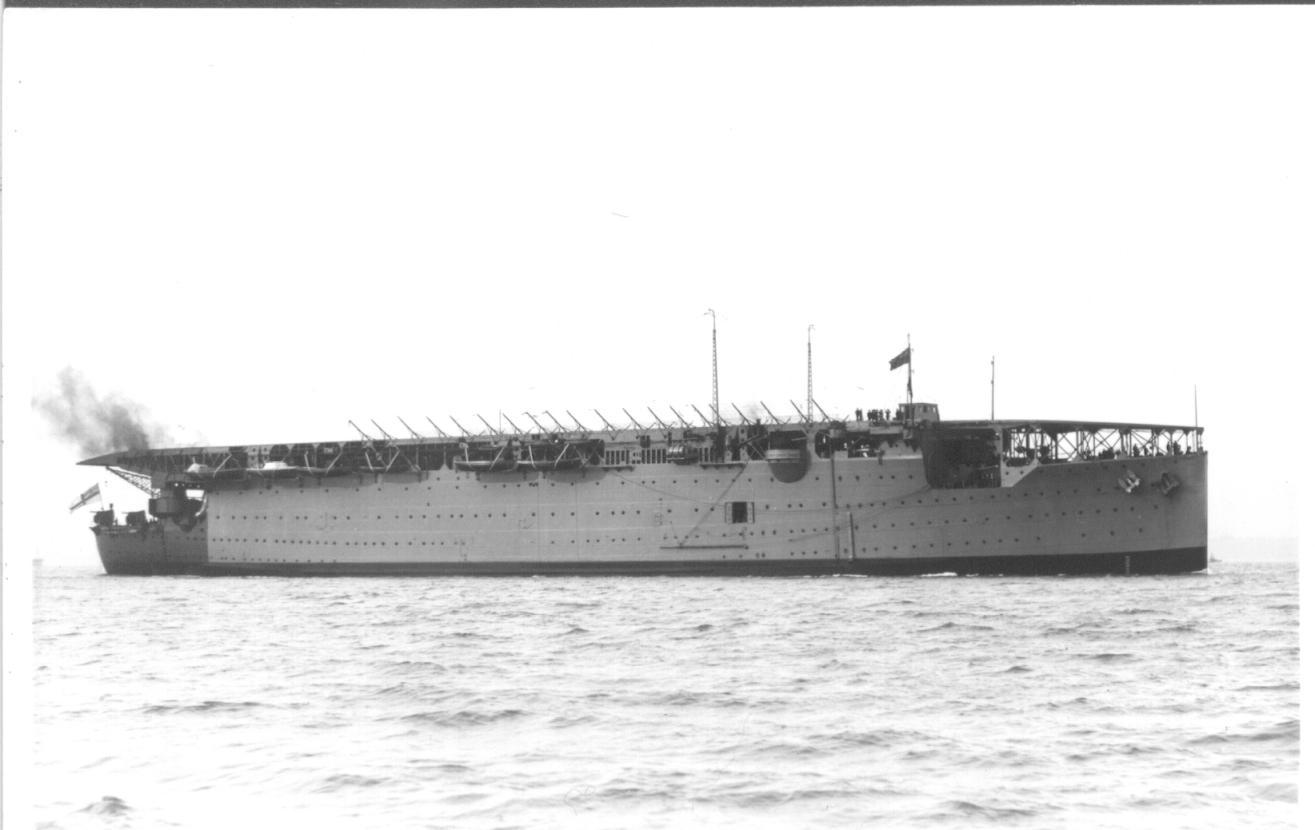
10. ARGUS
(survived),14,000 tons, 20 knots, 20 aircraft, 370 crew
plus aircrew, 1918
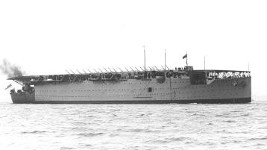
HMS
Argus (NavyPhotos/Mark Teadham)
11. EAGLE,
22,600 tons, 24 knots, 20 aircraft, 750 crew plus aircrew,
1920, lost:
EAGLE
(Capt L D Mackintosh), 11th August 1942, Western
Mediterranean, north of Algiers, Algeria (38.05N,
03.02E) – torpedoed by German ‘U.73’ (Rosenbaum).
Providing air cover for Gibraltar/Malta convoy
'Pedestal'; 159 men lost out a wartime crew of 1,160 (Casualty
List)
(Mediterranean
- Malta Convoys)
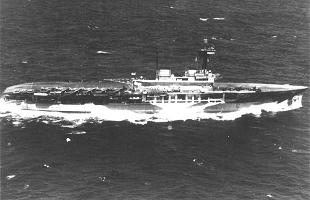
HMS Eagle (NavyPhotos)
12. HERMES
- 10,800 tons, 25 knots, 15 aircraft, 660 crew plus
aircrew, 1923, lost:
HERMES
(Capt R F Onslow+), 9th April 1942, Indian Ocean off
south east coast of Ceylon (07.35N, 82.05E) - by
Japanese carrier dive-bombers. Part of British Eastern
Fleet returning to Trincomalee; 293 crew lost
(Casualty
List)
(Japanese
Conquests - Carrier Attacks on Ceylon)
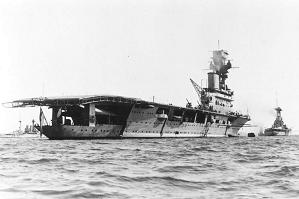
HMS Hermes (NavyPhotos)
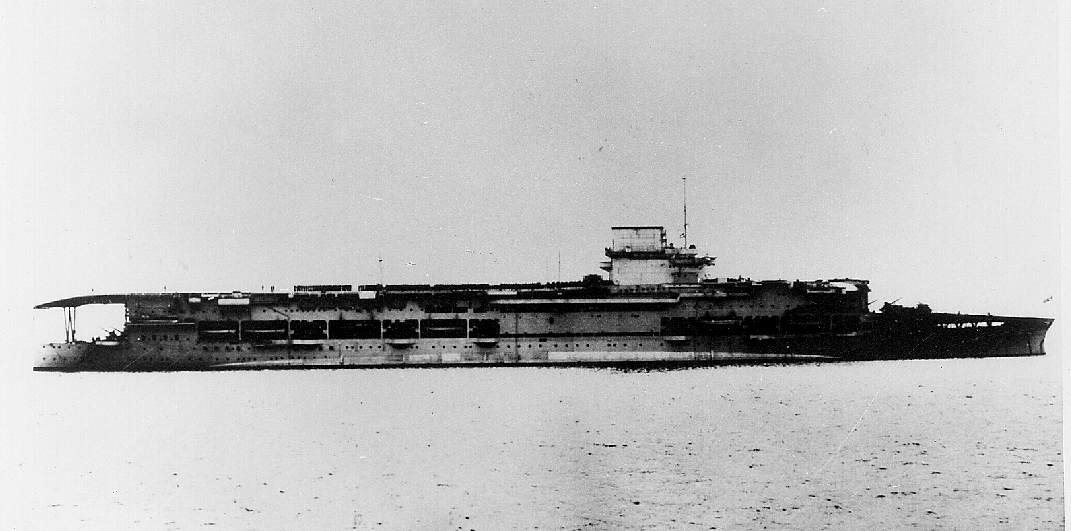
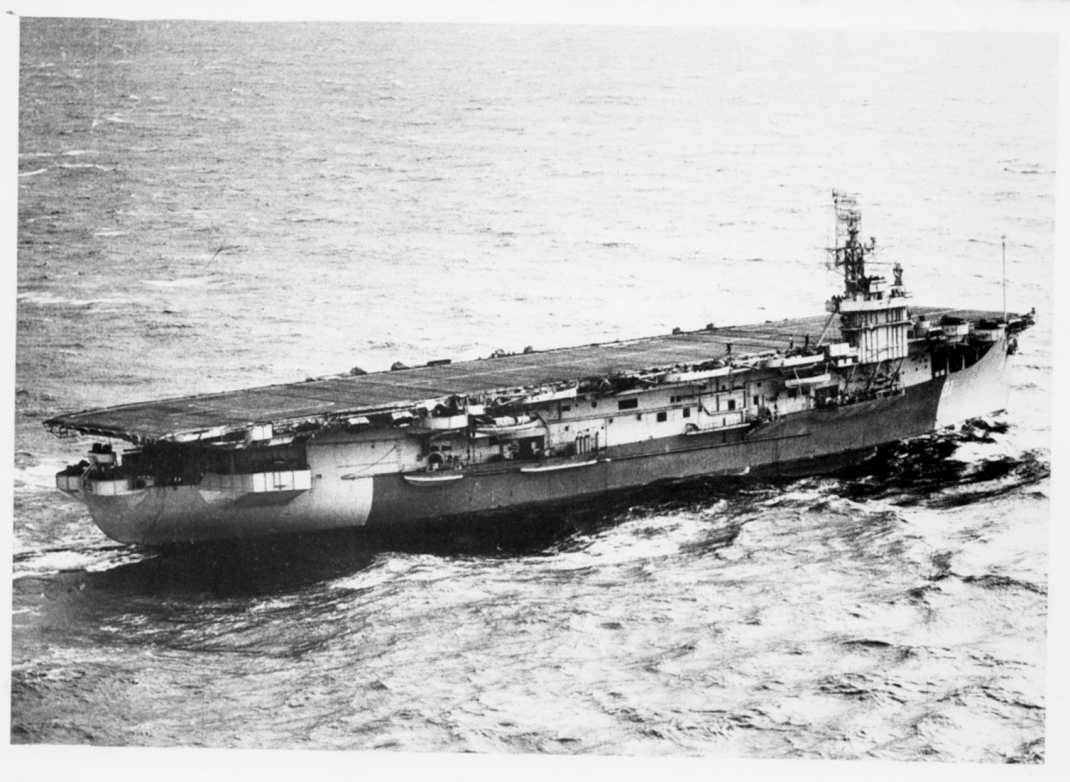
13. FURIOUS
(survived) - 22,400 tons, 30 knots, 36
aircraft, 1,200 crew, 1925
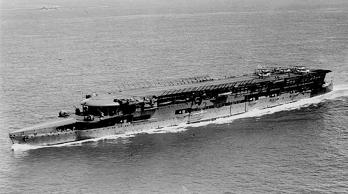
HMS
Furious (NavyPhotos)
14. Courageous class,
2 ships - 22,500 tons, 30 knots, 48 aircraft, 1,200 crew,
1928/30, both lost:
COURAGEOUS
(Capt W T Makeig-Jones+), 17th September 1939, North
Atlantic, south west of Ireland (50.10N, 14.45W) -
torpedoed by German ‘U.29’ (Schuhart). On anti-U-boat
patrol with destroyer screen in Western Approaches to
British Isles; 520 men including 36 RAF personnel lost (Casualty
List) (Battle
of the Atlantic).
GLORIOUS
(Capt G D'Oyly-Hughes+), 8th June 1940, Western
Europe, west of Lofoten Islands in Norwegian Sea
(c69.00N, 05.00E) - by 11in gunfire of German
battlecruisers 'Scharnhorst' and 'Gneisenau'. Sailing
independently from northern Norway at end of Allied
evacuation; 1,159 crew and 59 RAF personnel sailing from
Norway were lost. There were 39 RN and 3 RAF survivors,
of whom 3 died. Escorting destroyers Acasta
and Ardent
also
sunk (Casualty
List)
(Norwegian
Campaign)
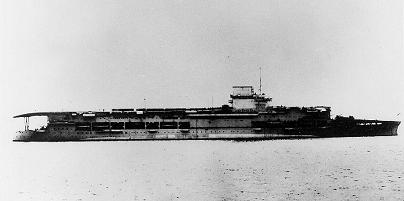
HMS
Glorious (NavyPhotos)
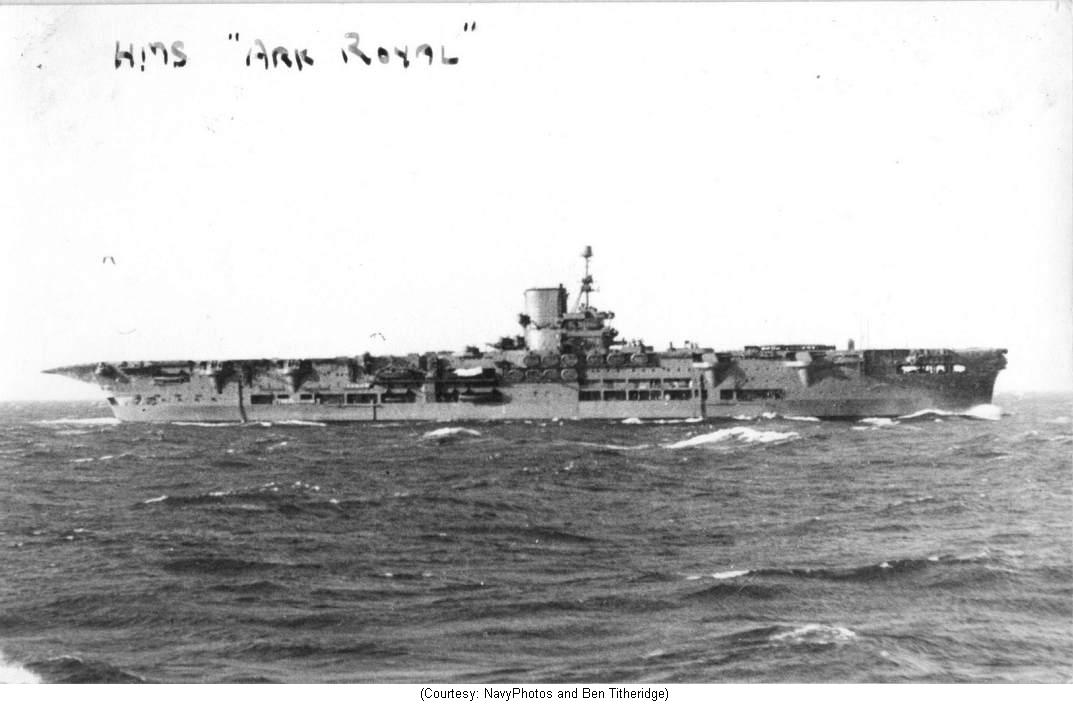
15. ARK
ROYAL
- 22,000 tons, 31 knots, 60 aircraft, 1,570 crew, 1938,
lost:
ARK ROYAL
(Capt L E Maund), 14th November 1941, foundered in tow
in Western Mediterranean, 30 miles east of Gibraltar -
by 1 torpedo on the 13th from German ‘U.81’
(Guggenberger) in 36.03N, 04.45W. Returning with Force H
to Gibraltar after ferrying Hurricane fighters within
flying range of Malta; 1 man killed. (Casualty
List) (Mediterranean
- Battle for Malta)
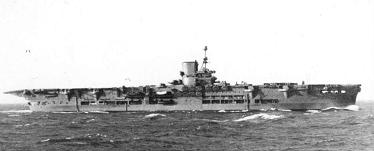
HMS Ark Royal (NavyPhotos/Ben Titheridge)
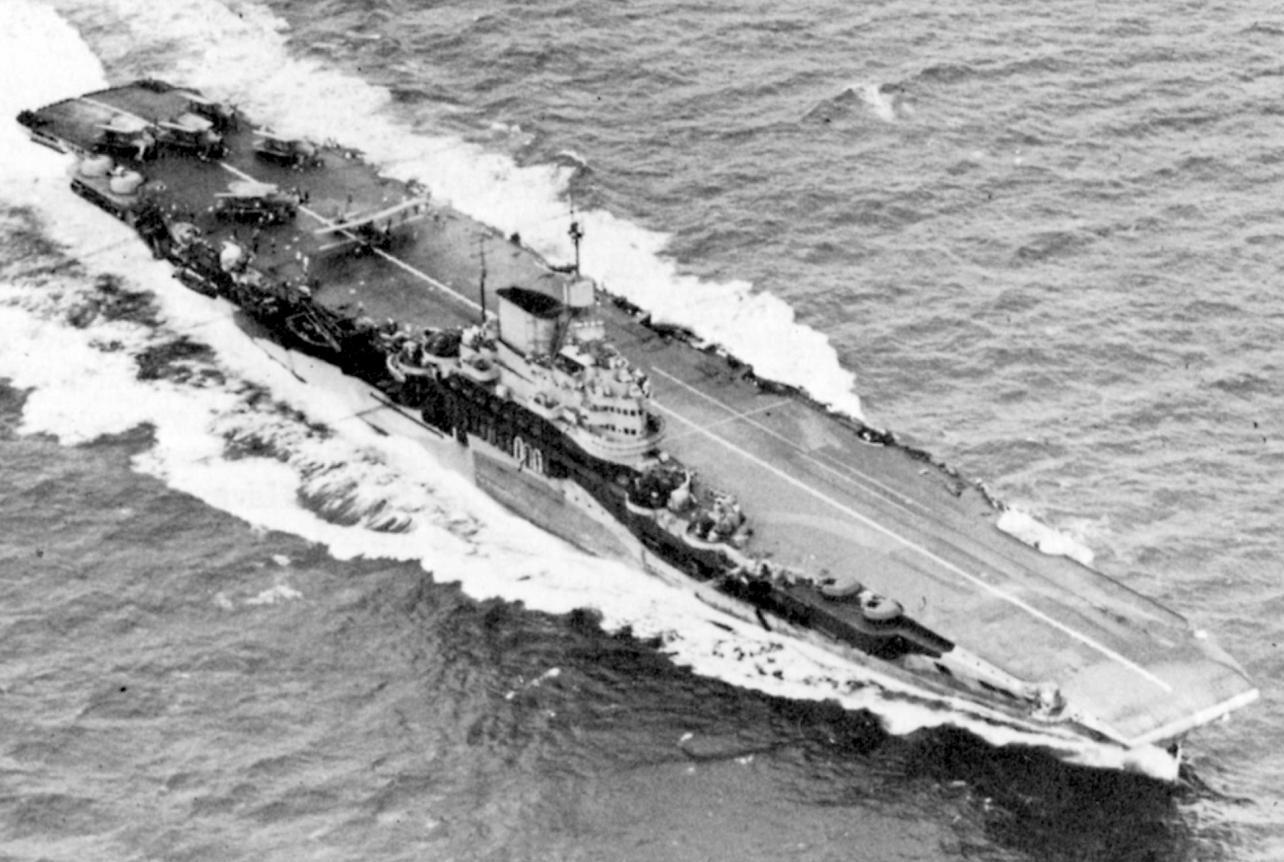
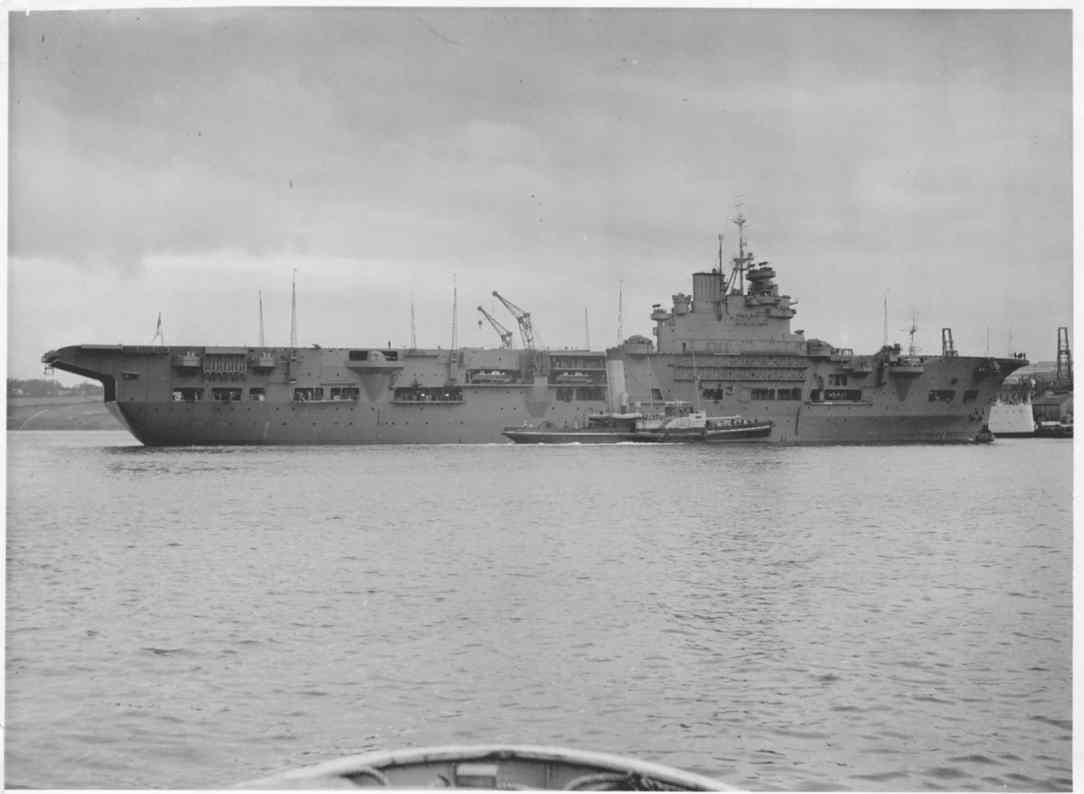
16. Illustrious class,
FORMIDABLE,
ILLUSTRIOUS,
IMPLACABLE,
INDEFATIGABLE,
INDOMITABLE,
VICTORIOUS,
6 ships - 23,000 tons, 31 knots, 36+ aircraft, 1,400 crew,
1940-44
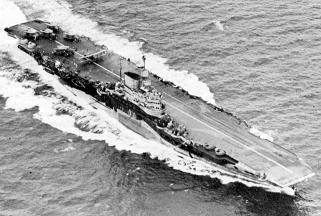
HMS Formidable
17. UNICORN,
built as aircraft maintenance ship - 14,700 tons, 24
knots, 35 aircraft, 1,200 crew, 1943
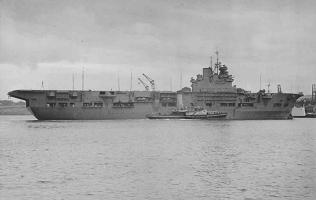
HMS Unicorn post-war
(NavyPhotos)
18. Colossus class,
COLOSSUS,
GLORY,
OCEAN, PIONEER, VENERABLE,
VENGEANCE,
6 ships completed by war's end - 13,200 tons, 25 knots, 40
aircraft, 1,300 crew, 1944-45. 'Pioneer' commissioned as
aircraft maintenance ship
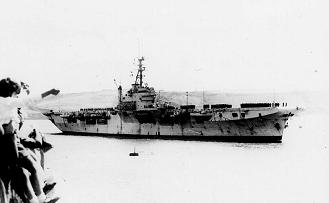
HMS Vengeance (NavyPhotos)
ESCORT
CARRIERS
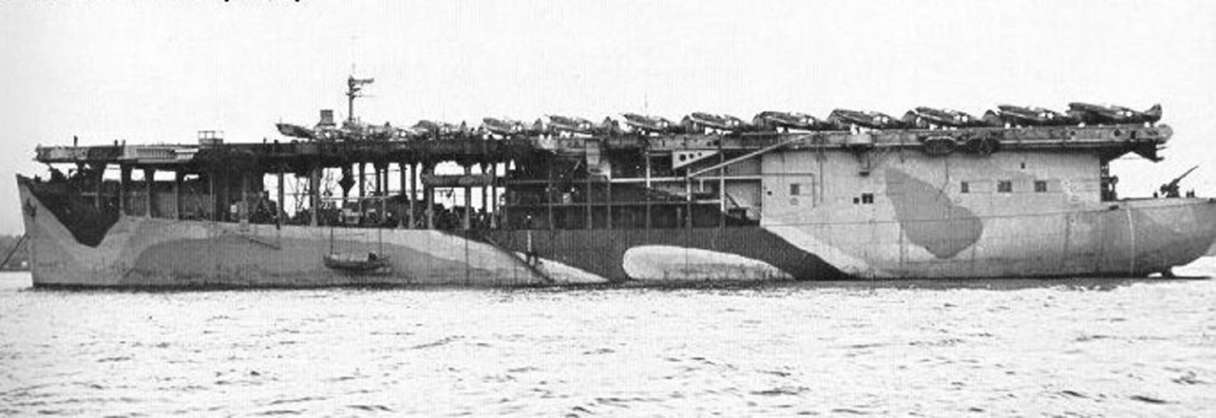
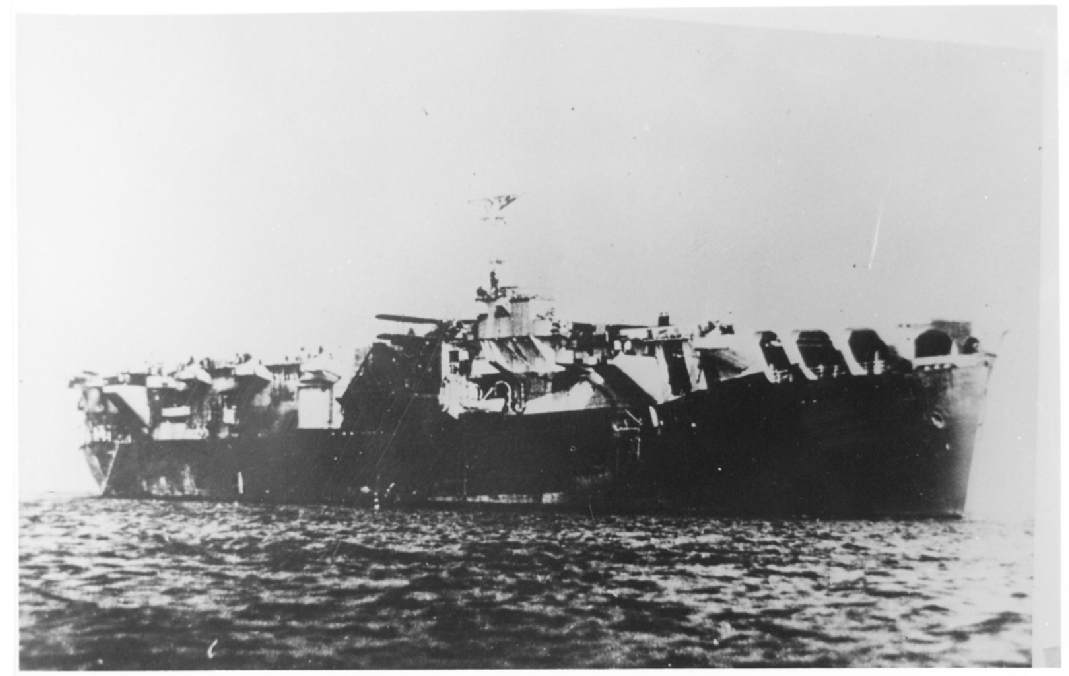
19. AUDACITY
- 11,000 tons deep load, 15 knots, 6
aircraft, 1941. Ex-German prize 'Hannover', lost:
AUDACITY
(Cdr D W MacKendrick+), 21st December 1941, North
Atlantic, NE of Azores (43.55N, 19.50W) - torpedoed by
German ‘U.751 (Bigalk). Providing air cover for
Gibraltar/UK convoy HG.76; 73 men lost (Casualty
List) (Battle
of the Atlantic)
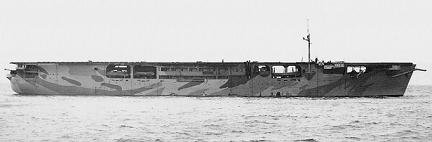
HMS Audacity (CyberHeritage, no
enlargement)
20. Archer class,
ARCHER,
AVENGER,
BITER,
DASHER,
(CHARGER), 5 ships built in US - 8,200 tons, 17 knots, 15
aircraft, 550 crew, 1941-42. 'Charger' retained by US Navy
as training ship, 2 lost:
AVENGER
(Capt A P Colthurst), 15th November 1942, North Atlantic
off the Strait of Gibraltar (36.15N, 07.45W) - torpedoed
by German ‘U.155’ (Piening). Providing air cover for
return North Africa/UK convoy MKF.1 following Operation
'Torch'; 504 crew lost, 17 saved (Casualty
List) (French
North Africa Campaign)
DASHER
(Capt
L A Boswell), 27th March 1943, Western Europe, 5 miles
south of Cumbraes Island in Firth of Clyde, SW Scotland
- by aviation gasoline explosion. Working up after
repairs to storm-damage sustained during Russian convoy
JW.53 the previous month; 358 crew lost, 149 saved
(Casualty
List) (following
Russian Convoy)
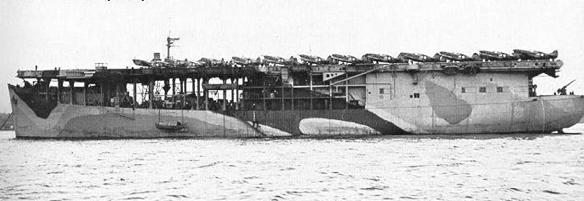
HMS Archer (NavyPhotos)
21. Attacker class,
ATTACKER,
BATTLER,
CHASER,
FENCER,
HUNTER,
PURSUER,
STALKER,
STRIKER,
8 ships all built in US, none lost - 11,400 tons, 17
knots, 18 aircraft, 650 crew, 1942-43
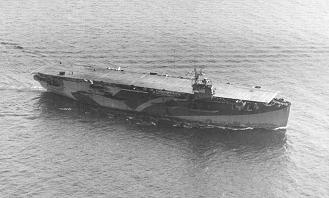
HMS Battler (NavyPhotos)
22. Ruler class,
AMEER,
ARBITER,
ATHELING,
BEGUM,
EMPEROR,
EMPRESS,
KHEDIVE,
NABOB,
PATROLLER,
PREMIER,
PUNCHER,
QUEEN,
RAJAH,
RANEE,
RAVAGER,
REAPER,
RULER,
SEARCHER,
SHAH,
SLINGER,
SMITER,
SPEAKER,
THANE,
TRACKER,
TROUNCER,
TRUMPETER,
26 ships all built in US - 11,400 tons, 17 knots, 24
aircraft, 650 crew, 1943-44 (some sources include
'Ravager', 'Searcher' and 'Tracker' in 'Attacker' class),
2 not repaired:
NABOB
(RCN-manned)
(Capt H N Lay RCN), damaged 22nd August 1944, Arctic
Ocean, north west of North Cape in Barents Sea (71.42N,
19.11E) - torpedoed by German ‘U.354’ (Sthamer). With
Home Fleet covering Fleet Air Arm attack on the
'Tirpitz' in Altenfiord, Norway and also Russian convoy
JW.59. Not repaired and laid up; 21 crew lost (Casualty
List) (Russian
Convoys)
THANE
(Capt
E R J Baker), damaged 15th January, 1945, Western
Europe, off Clyde Light Vessel in Firth of Clyde, SW
Scotland (55.08N, 05.25W) - torpedoed by German ‘U.1172’
(Kuhlmann). (Originally credited to ‘U.482’
which had already been lost). Believed ferrying aircraft
from Northern Ireland to Britain. Not repaired and laid
up; 10 crew lost (Casualty
List) (Battles
of Britain - U-boat Inshore Campaign).
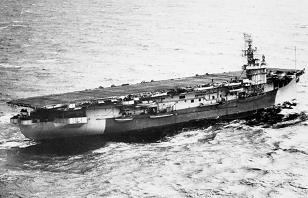
HMS Arbiter
(NavyPhotos)
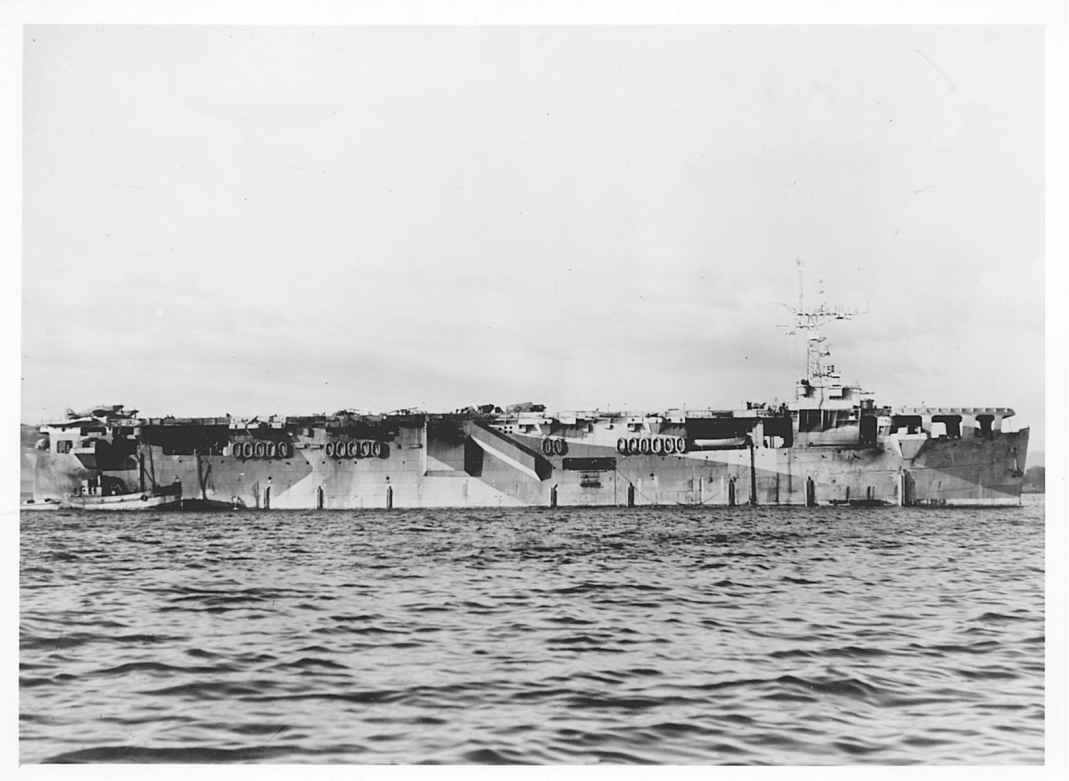
23. British-built Escort carriers adapted from merchant ship hulls, ACTIVITY,
CAMPANIA,
NAIRANA,
VINDEX,
4 ships built in Britain - circa 12,000 tons, 17 knots, 15
aircraft, 700 crew, 1942-44
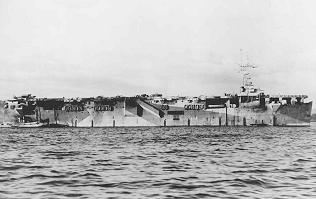
HMS
Nairana (NavyPhotos)
24. PRETORIA
CASTLE,
ex-armed merchant cruiser - 17,400 tons, 17 knots, 15
aircraft, 1943

HMS
Pretoria Castle (NavyPhotos)
MERCHANT
AIRCRAFT CARRIERS (MAC-Ships)
Oil
or grain bulk cargo carriers with superstructures removed
and flight decks added. Manned by Merchant Navy crews,
with Fleet Air Arm personnel to maintain and fly the
aircraft - mainly A/S Swordfish and Sea Hurricanes. The
ships flew the Red Ensign and some aircraft carried
‘Merchant Navy’ instead of ‘Royal Navy’ on their fuselage.
25. Empire class
Grain Carriers, EMPIRE MacALPINE, EMPIRE
MacKENDRICK, EMPIRE MacANDREW, EMPIRE MacDERMOTT, EMPIRE
MacRAE, EMPIRE MacCALLUM, 7 ships - 8,000 tons, 12 knots,
4 aircraft, crew not known, launched December 1942-January
1944. Equipped with hangar and lift
26. Empire Class Oil Tankers,
EMPIRE MacKAY, EMPIRE MacCOLL, EMPIRE MacMAHON, EMPIRE
MacCABE, 4 ships - 9,000 tons, 12 knots, 3 aircraft, crew
not known, launched May-July 1943. No hangar and lift;
aircraft stored and maintained on deck
27. Rapana Class Oil Tankers,
ACAVUS, ADULA, ALEXIA, AMASTRA, ANCYLUS, GADILA, MACOMA,
MIRALDA, RAPANA, 9 ships - 12,000 tons, 12 knots, 3
aircraft, crew not known, converted 1942-44. Anglo-Saxon
Petroleum Company tankers. ‘Gadila’ and ‘Macoma’ operated
under the Dutch ensign. No hangar and lift; aircraft
stored and maintained on deck.
CATAPULT
ARMED MERCHANTMEN (CAM-Ships)
Ordinary
merchant ships fitted with a rocket driven catapult on the
forecastle. They carried one Mk1(a) Hurricane with minimum
modifications and flown by volunteer RAF pilots, were
known as Sea Hurricanes, ‘Catafighters’ or ‘Hurricats’.
Quickly put into service in 1941 before the first escort
carriers appeared with the aim of driving off or shooting
down German bombers and reconnaissance aircraft,
particularly Focke Wulf Condors. Once flown off the pilot
usually had to ditch and hope to be picked up, or make for
the nearest friendly shore. The first ships were
requisitioned for Naval Service as Auxiliary Fighter
Catapult Ships and sailed under the White Ensign. Later
CAM-ships were merchantmen.
According
to Cdr Rippon in ‘Evolution of Engineering in the Royal
Navy’, Volume 2, some 35 CAM-ships made about 175 voyages
in two years - twelve were lost, eight catapult launchings
were made, six enemy aircraft shot down and one RAF pilot
lost. Requisitioned Auxiliary Fighter Catapult Ships
included ‘Ariguani’, ‘Maplin’ and two more, which were
lost in 1941:
PATIA,
(5,350t,
completed 1922, Cdr D M B Baker RNR+), lost 27th April
1941, Western Europe, near 20G Buoy, Coquet Island, off
Northumberland, NE coast of England - German bombers, 40
crew lost.
SPRINGBANK
(5,150t, completed 1926, Capt C H Godwin), lost 27th
September 1941, North Atlantic (49.10N, 20.05W) -
torpedoed by German ‘U.201’ (Schnee); 32 crew lost.