THE TOUR
REVIEWED
"The
Prince of Wales is to arrive in London at 3
o'clock this afternoon after his African and South
American tour. We give the arrangements for his
reception and a plan of his drive from Victoria
Station to Buckingham Palace on the following
page. An account of the Prince's memorable Journey
appears below, and a map on page 16 shows his
route in detail. Page 18 is entirely given up to
photographs taken during the tour, including two,
which reached London yesterday, of the last stage
in South America.
The journey
from which the Prince of Wales returns to-day is the
fourth of his Empire tours. Like two of the other
three, it has extended beyond the bounds of the
Empire, to countries whose welcome has been as
hearty as that given in the Dominions. The first
tour, lasting from August to November, 1919, was
through Canada, and included a visit to the United
States. The second, to Australia and New Zealand,
was begun in March and ended in October, 1920. In
October, 1921, the Prince set out for India, and
having continued his travels to Japan, returned in
June, 1922. This year's tour, which started on March
28, was to West Africa and South Africa, and took in
the three American Republics of Uruguay, Argentina,
and Chile.
The battle
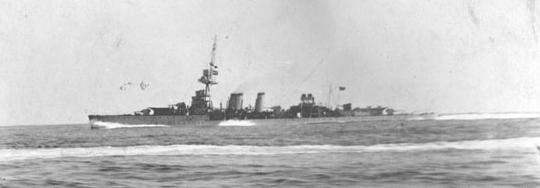
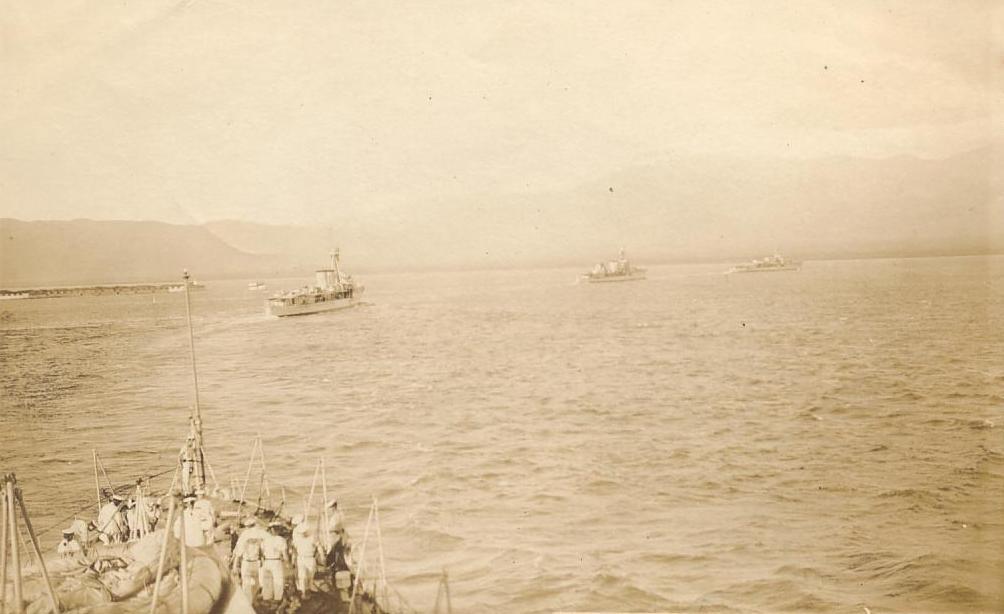
cruiser Repulse, with the Prince on board, left
Portsmouth under a heavy sky, but soon ran into the
sunshine. Early in the voyage she met the Atlantic
Fleet, on its wav home from the Mediterranean, and
in the neighbourhood of Vigo passed between two
lines of warships, three miles in length; a stately
scene enlivened by the traditional salutes and the
playing of ships' bands.
BRITISH WEST
AFRICA.
The Prince's
first experience of West Africa was at Bathurst, the
capital of the Gambia, which boasts itself the
oldest though the smallest British African
settlement. Only a day was available, and its hours
were crowded. There were addresses to receive,
greetings from the native chiefs of the
Protectorate, and cheers from the whole (as it
seemed) of the 100,000 population. Yet the Prince
found time, between luncheon and a garden party, to
motor in a hot sun over a good space of open
country.
Another day
and some part of its morrow were devoted to Sierra
Leone. After the official welcome came a meeting
with the people at Cotton Tree. The slopes of the
hillside were occupied by a varied multitude, from
paramount chiefs in the centre to Boy Scouts on the
outskirts. The Prince caught glimpses of civilizing
influence's in Sierra Leone on a drive to Fourah Bay
College, at the laying of the foundation-stone of
Government offices, at the opening of Freetown's
first agricultural show, and perhaps also from the
absence of mosquitoes at an entertainment at
Government House.
The stay on
the Gold Coast lasted almost a week. The Prince was
the first person to step ashore on the new
break-water at Takoradi, and the first to entrain on
the Kumasi railway; his landing is to be
commemorated by a tower. At Sekondi, on an
umbrella-shaped dais, he took the homage of the
chiefs, who sat around him under umbrellas of red,
gold, and other rich colours. Good Friday was spent
at Kumasi, where the head chiefs welcomed the King's
son at a grand palaver amidst more magnificent
umbrellas. The "talking drums." such as have spoken
at Wembley, beat their salute; a golden sword was
presented as a gift from All Ashanti; and then
native dancers gave an entertainment. The former
King Prempeb was a spectator of it all.
In this
region and on his return journey to the coast the
Prince saw the contrasts of the country; primeval
forests and cocoa plantations, woods and aluminium
deposits, vestiges of past warfare and evidences of
present industry.
And so to
Accra for Easter Sunday. This was indeed a memorable
festival for the whole Gold Coast; since, after
joining the British community in Divine service,
inspecting the hospital, and going among the
seething life of the native quarter, the Prince
inaugurated at Achimota a university college, to be
called by his name, where selected youths from every
race and tribe may get such an education as will fit
them to ensure and further the progress of British
West Africa.
A NIGERIAN
DURBAR
It was
feared that plague at Lagos would prevent the
arranged visit to Nigeria. So grave a disappointment
was avoided by landing at Iddo for the journey to
Kano, 700 miles in the interior. The Lagosians,
nevertheless, saw the Prince. They lined the
sea-front for three miles, and thousands waded far
into the water, as the tender conveying his Royal
Highness from the Repulse passed slowly to Iddo. And
how they shouted! It was on the railway to Kano that
the Prince drove the engine for 23 miles and
received the proper pay, amounting to 10d.; but the
value of the whole journey lay in the panorama it
afforded of Nigerian scenery - the swamps, the
forests, the bush lands, the plateaux, and the great
River Niger.
Kano seemed
familiar; it was so like the West African town at
Wembley, but on a larger scale. As the Prince drove
along the dusty lanes within the 13 miles of mud
walls, groups of natives knelt at his approach in
mute reverence. Later, on the Kano plain, was held a
Durbar, where 20,000 horsemen led by the Moslem
chieftains of the northern provinces gave a
quasi-medieval display in which jesters, dancers,
even lictors, mingled with chain-mailed cavaliers.
The parade over, the Prince addressed the Emirs, who
had been presented to him, and the people, recalling
that during the war they had generously contributed
to the common cause. A similar recollection occurred
in his next speech, spoken, during a break in the
return journey to the coast, at Ibadan, the populous
centre of the palm kernel industry. Hither came the
rulers of Jorubaland with their umbrella canopies:
and here a wreath was laid on a war memorial of the
Nigerian Regiment.
Polo,
tennis, and dancing at Government House - in intense
heat - provided the exercise the Prince desired when
he came again to Lagos after this trip into the
interior. The chief ceremony of his short stay was
the laying of the foundation-stone of Lagos
Cathedral. April was now far-advanced, and the visit
to West Africa was ending. The effect of that visit
was indicated by the Governor of Nigeria, Sir Hugh
Clifford, in a message to The Times given to our
Special Correspondent. After commenting on the
unprecedented enthusiasm of the natives, Sir Hugh
said:-
The Prince,
ot course, Is himself; his personality would awaken
enthusiasm anywhere. Nigeria. however, has stood
forth also as an embodiment of British rule, and it
seems to me that through him it bas received a
striking testimonial while nothing could stimulate
the spirit upon which the efficiency and the
justification of our rule alike depend more vitally
than his coming among us.
ARRIVAL AT
THE CAPE
The voyage
from West to South Africa took rather more than a
week. On a morning of fog the Repulse was escorted
by the flagship Birmingham and other vessels into
Table Bay. Soon the mists gave place to warm
sunshine, and the Prince landed at Cape Town under
the fairest conditions. In the group that welcomed
him, in addition to the Governor-General (Lord
Athlone), the Princess Alice, and their family, were
General Hertzog with members of the Union Cabinet,
Sir Thomas Smartt, and General Smuts. Such a union
of parties was but the prelude to an immense
congregation of white people and coloured people -
English, Dutch, Malays, Indians, and Chinese - in
the beflagged streets. The presentation of civic
addresses, on a platform in the middle of the
Parade, was watched by many thousands; and the
Prince's reply, caught up by the wireless, was
listened to by many more thousands in distant towns
and country districts. Johannesburg, heard it, a
thousand miles away.
The Cape
impressed the Royal visitor with the loveliness of
its peninsula; it gave him diverse entertainment;
and he entered thoroughly into the ways of the place
and the people. From the abounding programme three
events stand out conspicuously. First in order comes
the installation of his Royal Highness as Chancellor
of the University. To this ceremony he was
conducted, in a tented wagon drawn by 12 oxen, by
students strangely and wonderfully attired, who,
with their fellows, lightened the gravity of the
subsequent proceedings after the manner of students
the world over. The second event also was associated
with the University; with its new foundations at
Groote Schuur. In laying the stone of the new
building the Prince dwelt on the ideals of Cecil
Rhodes, to whose house, near by, he had naturally
been taken.
Rhodes (he
said) knew no differences of race between the two
great European strains which together made up the
history of this splendid Union, and saw no barriers
between that union of which he was only privileged
to dream and the great commonwealth of nations
within the British Empire.
This theme
was further developed on the third notable occasion,
that on which the Prince was the guest of the Union
Senate and House of Assembly at a banquet at
Parliament House. He pursued it, not only in his
formal speech, ending with a sentence in Afrikaaans,
but less directly and perhaps as effectively in
private conversation with Dutch representatives. The
Dutch population, as a whole, delighted to greet him
in his movements about Cape Town and the
neighbourhood.
TRAVELS
UP-COUNTRY
Early in May
the Prince departed from Cape Town on his travels
up-country. At Stellenbosch, that very early and
very Dutch settlement, he was dragged through the
streets in a decorated landau by students of the
University, and at Paarl was cheered by thousands of
white and coloured school- children - the
forerunners of many such gatherings. The first
commando, composed of 160 English and Dutch farmers
awaited him at Worcester station. These bodyguards
were to be another familiar sight. So also, in the
passage of the cream-coloured train through the
south-eastern districts of the Cape Province, were
the parties of villagers who had come long distances
on the mere chance of "getting just a peep" at the
Prince. The coloured minstrels who serenaded the
train at Colesberg had been happily inspired, and
went away enchanted with right royal praise of their
melodies. Companies of ex-Service men - never
forgotten by their "comrade " - were frequent. At
last Port Elizabeth was reached. Having come through
ostrich and sheep lands, the Prince was once more at
the coast, in a town of a century's astonishing
growth. Here he had his first great native welcome
in South Africa, a welcome in which poetry from a
native poet combined with music from native choirs.
For the next
week the route was never very far from the sea. Amid
the festivities of Grahamstown the Prince recalled
the history of the 1820 settlers, of which he was
again to be reminded when, after a golfing respite
at Port Alfred, he reached King William's Town by
way of Bedford and the chain of towns in the Great
Fish River valley notable from the old Kaffir wars.
Now came a series of meetings with Bantu chiefs and
peoples.
At King
William's Town, at East London, and at Umtata he met
them in their thousands. Many had made a several
days' journey to hail the "Rising Sun," as they
termed the Prince. The chiefs were attired in an
infinite incongruity of European garments. The
Prince wore the khaki or scarlet of the Welsh
Guards. In his speeches he warned the natives
against mistrust of authority, advised them to learn
how to manage their own affairs through the council
system, and encouraged them to appreciate education.
Nearly 3,000
miles were covered in the Cape Province. The next
stage of the tour was the Orange Free State. Into
Bloemfontein, the capital, the Prince rode at the
head of a Boer commando of over 2,000, most of whom
had been active foes of England in the South African
War, and some, like their leader, had joined the De
Wet revolt in 1914. They were pleased with the
Prince's mounting the fine horse they had reserved
for him, pleased with his friendliness and, above
all, with his speaking to them in their own tongue.
NATIVE
GATHERINGS
From
Bloemfontein the course was eastwards into
Basutoland where on the flats above Maseru was a
great clan gathering of the natives. The whole
manhood of the country was present, and the sight of
the 50,000 horsemen who turned their gaze on the
slender figure in the scarlet of the Guards was most
memorable. At Harrismith, having visited several
rural centres, the Prince bade farewell to the Free
State, thanking the inhabitants for a welcome
spontaneous, real. and unaffected.
He was in
Natal at the beginning of June, enjoying the
Drakensberg crossing, and at Ladysmith showing a
keen interest in every vestige of the siege and
every site of a battle. Thence to Durban, almost
hidden in flags and packed with shouting, singing
people. The expressive loyalty of 23,000 Natal
Indians, and the opening of a new graving dock, the
second largest in the world, were signal incidents
of the two days in Durban.
A contrast
was afforded, on the Prince's crossing into
Zululand, by the indaba and native dance at Eshowa.
Another Zulu dance, but on a smaller scale, formed
part of the Maritzburg programme, which included
also the presentation of regimental Standards to the
Natal Carbineers, reputed the oldest Volunteer Force
in the Empire. Other pleasant spots in the "Garden
Province" were visited in a day, after which some
hundreds of bearded veterans of the Boer War gave
earnest at Ermelo of the welcome awaiting the Prince
in his progress through the Transvaal.
First,
however, he went to Swaziland, gaining further
insight into the native mind and customs. A wide
circle was then made to the north so that Pretoria
was reached from Pietersburg. Pretoria showed its
determination not to be outdone in enthusiasm, and,
as the Prince remarked in a speech, carried on what
he had experienced throughout the Union. The parade
of children was especially impressive. It was in
response to an observation by Mr. Hofmeyr on the
friends made in the Transvaal that the Prince
confessed he had learnt more from wayside meetings
and informal talks than from set speeches, and he
was glad to have conversed with so many
Transvaalers.
RAND AND
RHODESIA
The weather
was as cold in Johannesburg as the people were
hearty. This is saying much, for the police had hard
work to keep the zealous crowds within bounds. The
Prince opened the University of the Witwatersrand,
and received the honorary degree of Doctor of Laws;
he went down a gold mine; and on June 23 kept his
31st birthday. Three days later he was at Mafeking
looking at the memorials of the siege.
From
Bulawayo the Prince drove to the Matopos. He stood
by the grave of Rhodes at "The World's View." He
saw, too, the ruins of Zimbabwe. Rhodesia gave him
some shooting. At Salisbury and other points the
Mashonas and natives from far afield came with their
homage and dances. The Victoria Falls were a
spectacle grander in their way than anything South
Africa had yet shown him. At Livingstone he met the
Barotse, and admired the discipline of the Northern
Rhodesian native police. Broken Hill marked the
northern limit of the tour.
The chief
break in the return to Cape Town was at Kimberley,
though there were several other halts. In the end
the Prince had traversed over 13,000 miles of South
African soil, nearly one-third of that distance
having been by road. The voyage from South Africa to
South America must have been a relief after so
strenuous a time ashore. It was interrupted by two
days at St. Helena, which allowed not only for a
visit to Napoleon's tomb, but for an examination of
the relics and records of the island, and, of
course, Longwood.
URUGUAY
When, on
August 14, the arrival of the Repulse was greeted by
the guns and sirens of Montevideo, Uruguay might
have been asking the Prince to forget he was in
foreign parts. An enormous crowd welcomed him; there
was an imposing military display; and here as
elsewhere youth did its best to honour youth.
Taranco House, a residence in the old town, was set
aside for the visitor's use; but he had little
leisure to spend in it.
A live-stock
show and a ceremony at the Military Academy were two
of the Prince's earlier engagements. Between the
presentation of an address from the British Chamber
of Commerce and a State dinner at Government House,
followed by a gala performance at the Solis Theatre,
he held a reception at the Parque Hotel. In the
President's company he went to the Pantheon Nacional
and laid a wreath on tho urn containing the ashes of
Aetigas, "thinker, philosopher, soldier." The
British Hospital, the National University, and the
new Legislative Palace attracted him in their
several ways. At the last he was received by the
Presidents of the General Assembly and the Chamber
of Deputies. At a luncheon of the Anglo-Uruguayan
Reception Committee he expressed his thanks in
Spanish.
"All
Uruguayans, simple citizens as well as the official
world, are charmed beyond words with the Prince, his
democratic manner, simplicity, and graciousness."
Such was the message which Senor Blanco, the Foreign
Minister, asked our Special Correspondent to send to
England.
ARGENTINE
REVIEWS
From
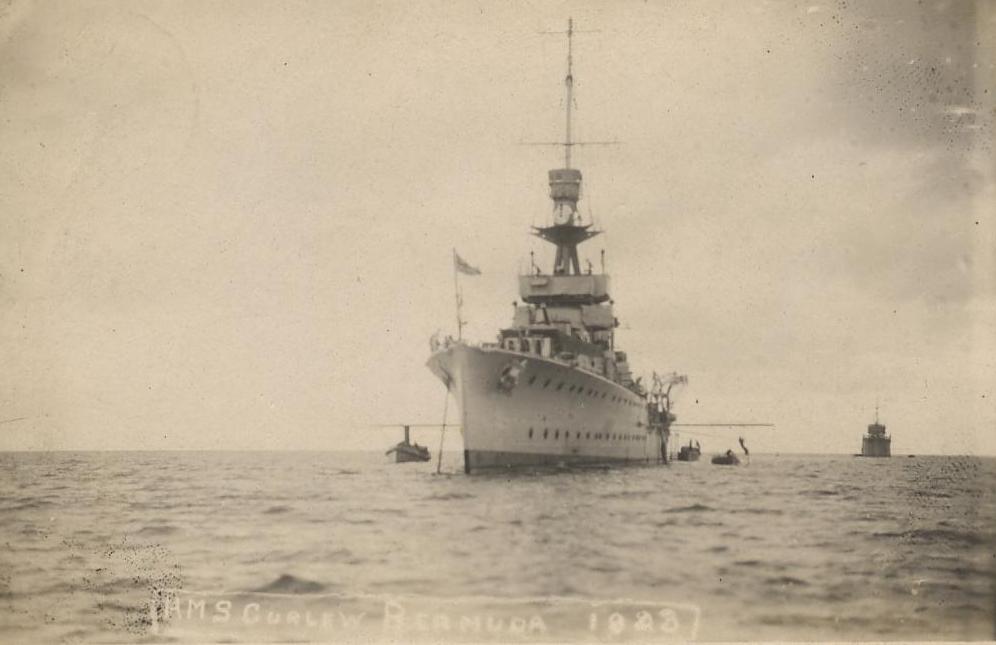
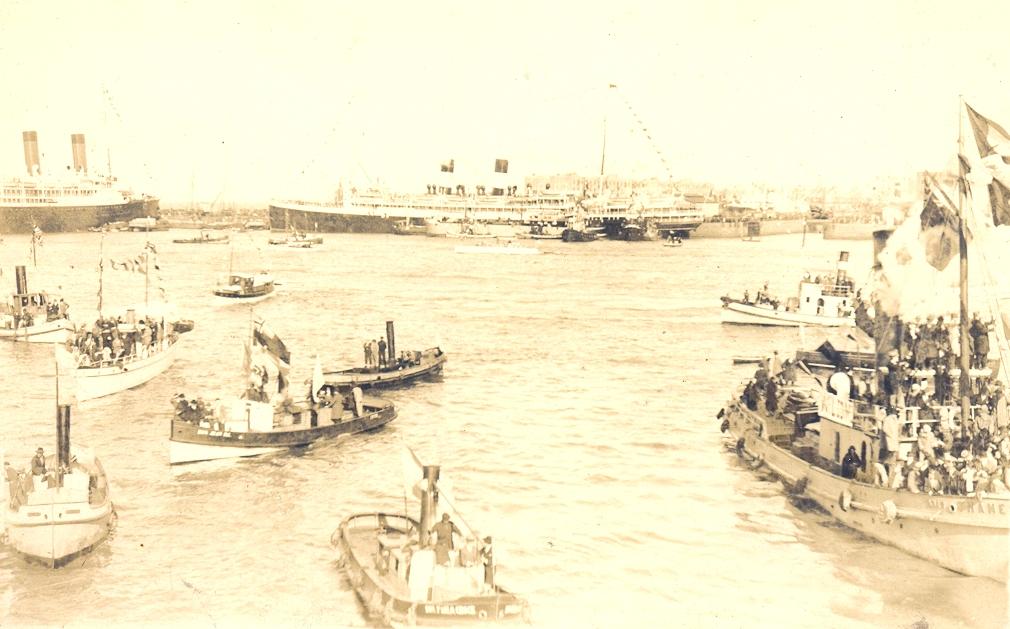
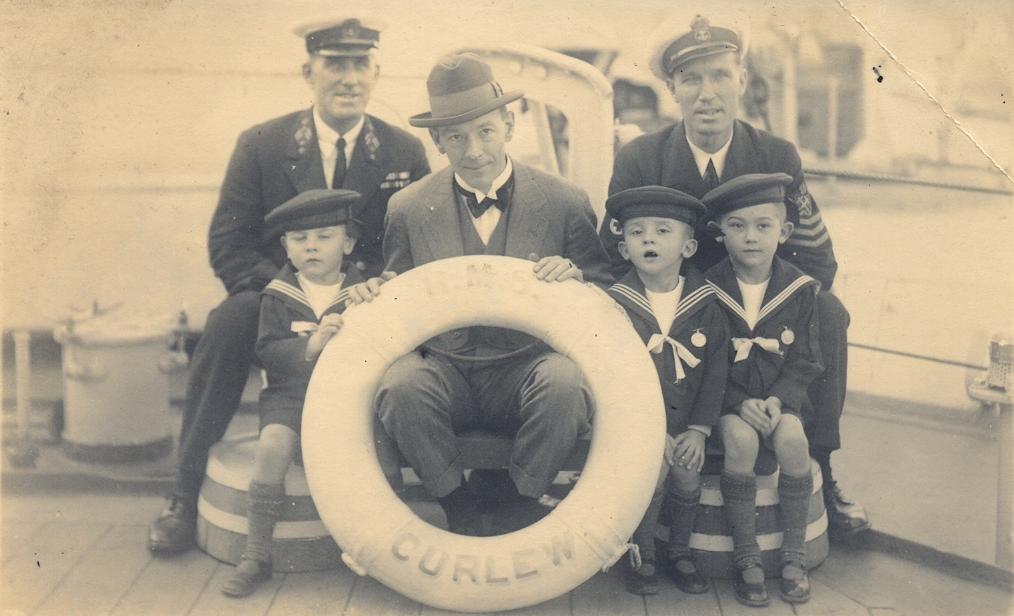
Montevideo the light cruiser Curlew bore the
Prince up the estuary of the River Plate to Buenos
Aires. President de Alvear met his guest on the quay
and together they drove, in a carriage drawn by four
black horses with gilded harness, through the
crowded streets of the city. " Viva el Principe"
shouted the onlookers, whose numbers almost
overpowered the police and tested severely the crack
regiments guarding the Plaza Colon. Nor did the
shouting cease while the Prince was to be seen; it
followed his visits to the harbour, factories, and
suburbs. One day was spent in La Plata, and the
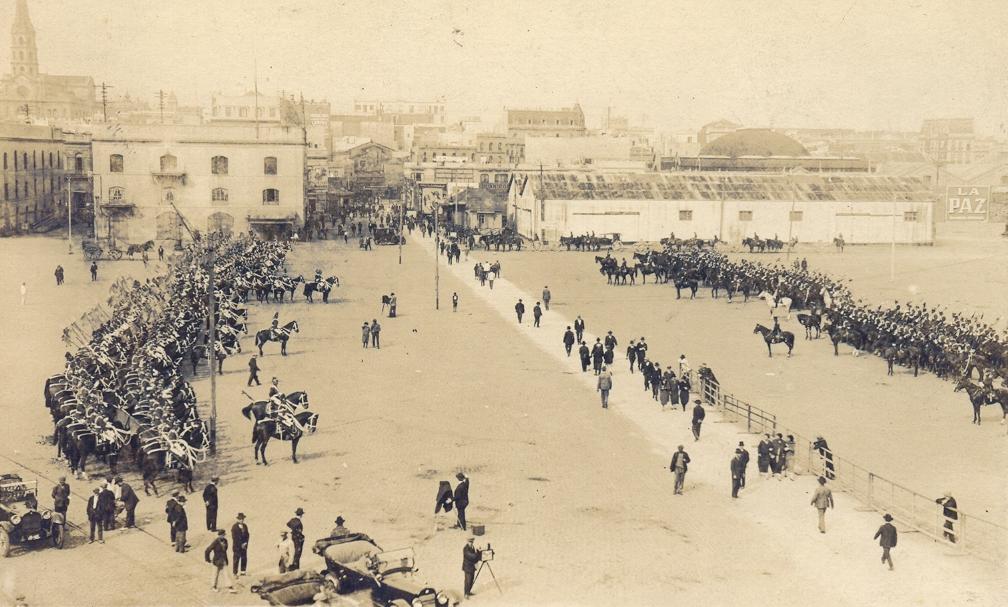
chief business of another was a military review, at
which the parade of 12,000 troops was led by
detachments from the Repulse and Curlew
with a Marine band playing "Hearts of Oak." This
review lasted two hours; at its conclusion the
Prince complimented the President on the military
staff's magnificent display.
A review of
a different kind was that of 50,000 national school
children, who sang "God Bless the Prince of Wales"
in English. The enthusiasm of the crowds, perhaps,
reached its height at the races in the Hippodromo
Argentino, though it had seemed nothing could be
more tumultuous than the cheers and shouts that rang
around the yacht in which the Prince was taken to
the docks and given a glimpse of the trade and ocean
traffic of the great port.
A stay at an
estancia, where he rode, watched the roping of
colts, and fraternized with the gauchos, made a
restful interval in the festivities of Buenos Aires.
Returning, the Prince spent some time among the
British residents. He inspected ex-Servicemen on the
Plaza Britanica, and in the Calle Ituzaingo unveiled
a Scottish war memorial.
The Prince
met still more of his countrymen on a 1,500 miles
tour north of Buenos Aires; a tour full of fresh
interests. There were the vast herds of the
Argentine Mesopotamia, the sports and songs of the
gauchos, the processes of turning livestock into
meat extracts and soup cubes. There was also the
fascination of wide horizons.
ACROSS THE
ANDES
After the
plains, the heights. The Andes were crossed, the
Pacific slope descended, and Santiago of Chile
reached. Here the Prince again found packed streets
and a warm welcome from the Chileans and their
President. The head of the Republic, at a
Presidential banquet, referred in eloquent words to
the days " when your sailors and ours together
consolidated the independence of South America" In
his reply the Prince said:-
It was my
hope that my visit to Chile might have contributed
to draw closer the bonds of amity which, for more
than a hundred years, have united the two nations. I
begin to fear that that is almost superfluous, but
not entirely so, I hope, for I would like to think
that my visit will set the seal on a century of
unbroken cordiality and will initiate a new era of
even closer collaboration.
These
references to the past were reiterated on the visit
to Valparaiso, when the ties of friendship with the
Chilean Navy, dating from the time of Cochrane and
O'Higgins, were renewed by the Prince's inspection
of the Naval Academy and his welcome on board the
Almirante Latorre.
Valparaiso
was the last city on the long tour. The three
Republics had been magnificent hosts, and to the
three Presidents - President Serrato in Uruguay,
President de Alvear in Argentina, and President
Alassandi in Chile- the Prince offered his hearty
thanks. The return journey to Argentina was delayed
by avalanches in the Andes. Some days later than was
anticipated the Repulse bore the Prince from the
shores which had given him so wonderful a
hospitality, and in which he had strengthened by his
personality the links of national friendship.